Guides / Cuts and Grain
Rotary, Plain Sliced, Quarter and Rift Cut Veneer: How the Cut Changes the Grain
September 22, 2026
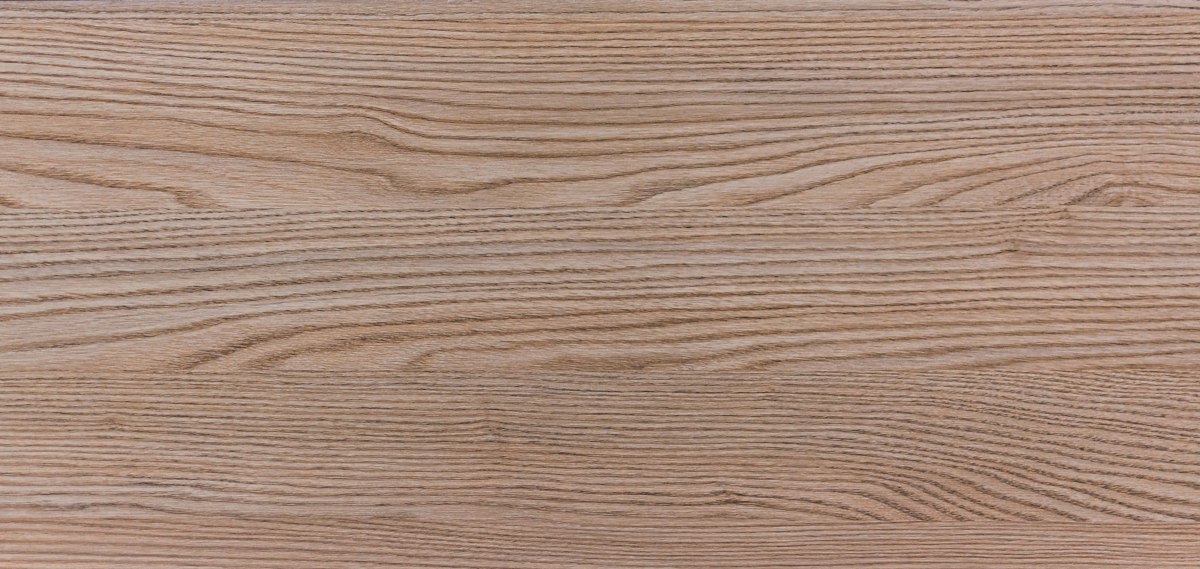
Species decides the color of a veneer face. The cut decides the figure. Take one white oak log and you can get a face with wide cathedral arches, a straight stripe crossed by silver flakes or a calm, tight grain that looks almost like a line drawing. Same tree, same color, different product and a different price.
This guide explains the five common cuts, what each looks like and how to specify the one you want.
Why the cut matters
A log is a set of growth rings around a center, with rays running out from the center like spokes. When a knife slices through the log, the angle at which it meets those rings and rays sets the pattern on the leaf. Cut across the rings at a shallow angle and you get arches. Cut straight across them and you get a stripe. Cut along the rays and, in species with large rays such as oak, you get fleck.
The cut also decides how much veneer a log yields and how wide the leaves are, which is why cut and price move together.
Rotary cut
How it is cut. The whole log is mounted on a lathe and turned against a long knife, which peels off a continuous sheet the way paper unrolls from a roll.
What it looks like. A broad, wild and variable figure, because the knife follows the growth rings all the way around. Adjacent sheets do not repeat.
Leaf size and yield. Very wide, continuous sheets and the highest yield of any cut. That makes rotary the lowest cost face in most species.
Where it is used. Plywood faces and cores, birch and maple panels, paint grade work and any job where a wide seamless face matters more than a classic figure.
Plain sliced (flat cut)
How it is cut. The log is cut in half and each half is sliced parallel to a line through the center.
What it looks like. The familiar cathedral figure: a series of arches in the middle of each leaf with straighter grain toward the edges. This is what most people picture when they think of a wood cabinet door.
Leaf size and yield. Wide leaves, often 6 to 12 in depending on the log, with good yield. Moderate price.
Where it is used. Kitchen and bath cabinets, furniture, doors and most general veneer work. If a specification says only “sliced”, plain sliced is usually what arrives.
Quarter sliced
How it is cut. The log is cut into quarters and each quarter is sliced so the knife meets the growth rings at close to a right angle.
What it looks like. A series of straight stripes. In oak and a few other species with large rays, the knife also exposes the rays as fleck, sometimes called flake: irregular silvery marks running across the stripe. In species such as sapele the quartered face shows a ribbon stripe that changes as light moves across it.
Leaf size and yield. Narrower leaves, often 4 to 8 in, and lower yield than plain sliced. Higher price.
Where it is used. Architectural millwork, high-end cabinetry, Arts and Crafts style work in oak and anywhere a straight, formal stripe is wanted.
Rift cut
How it is cut. Also from a quartered log, but sliced at an angle to the rays rather than along them. The goal is to avoid fleck while keeping a straight grain. In oak, rift is sometimes produced with a comb grain selection for the straightest, most even leaves.
What it looks like. A tight, straight, even grain with little or no fleck. Calm and uniform across a wall.
Leaf size and yield. Narrow leaves, often 3 to 7 in. In oak, rift is usually the lowest yield of the sliced cuts and often the most expensive.
Where it is used. Modern millwork, rift white oak kitchens, reception desks and wall paneling where the grain should read as texture rather than pattern.
Half round
How it is cut. The log section is mounted off center on a lathe, so the knife cuts a shallow arc through the growth rings.
What it looks like. Somewhere between rotary and plain sliced: broad arches with a softer figure than plain sliced.
Leaf size and yield. Wider leaves than plain sliced from the same log, with good yield.
Where it is used. Figured species and large panels where plain sliced leaves would be too narrow.
The five cuts side by side
| Cut | Figure | Typical leaf width | Relative yield | Relative price |
|---|---|---|---|---|
| Rotary | Broad, wild, variable | Very wide, continuous | Highest | Lowest |
| Half round | Broad arches | Wide | High | Low to moderate |
| Plain sliced | Cathedral arches | 6 to 12 in | Good | Moderate |
| Quarter sliced | Straight stripe, fleck in oak | 4 to 8 in | Lower | Higher |
| Rift cut | Tight straight grain | 3 to 7 in | Lowest in oak | Highest in oak |
Typical ranges. Width and price vary with species, log size and the supplier.
Common mistakes when specifying a cut
Naming only the species. “White oak veneer” can arrive as any of three looks. Always write species and cut together, for example rift white oak or plain sliced walnut.
Mixing cuts across one room. Plain sliced doors next to rift sliced wall panels in the same species look like two different woods. If the design calls for both, make it a deliberate choice.
Expecting wide rift leaves. A 10 in wide rift oak leaf is rare. Narrow leaves mean more seams per face, so plan the layout around the leaf width the supplier can actually deliver.
Ignoring yield when the budget is tight. If rift is over budget, plain sliced or quartered in the same species can keep the color at a lower price.
How to specify the cut on an RFQ
Write the species and the cut on the same line, then add what goes with it:
- Species and cut, for example quarter sliced white oak.
- Whether fleck is wanted, accepted or not wanted, if the species has rays.
- Minimum leaf width and length for your panel layout.
- Grade and match, for example A grade, book matched, balance match.
- Square footage plus waste, and the form: raw leaves, backed sheet or spliced face.
- A photo of the look you want if you are not sure of the cut.
If you are not sure which cut you are looking at, a photo usually settles it. Rotary shows a wild, broad figure. Plain sliced shows arches. Quarter shows a stripe and, in oak, fleck. Rift shows fine straight lines with no fleck. The supplier will confirm the cut in the quote.
If you want rift oak, see rift cut white oak veneer, and for the rest of the line our guide to veneer specification.
See also the veneer cuts reference for leaf widths, yield and the cuts offered in each species.
Frequently asked questions
What is the difference between quarter cut and rift cut veneer?
Both are sliced from a quartered log. Quarter cut meets the growth rings at close to a right angle and in oak shows ray fleck, the silvery flakes across the stripe. Rift cut is sliced at an angle to the rays, so it shows a tight straight grain with little or no fleck.
Is rotary cut veneer lower quality?
No. Rotary is a different look, not a lower grade. It gives the widest sheets and the highest yield, so it is the standard for plywood faces and species like birch and maple. It is graded like any other cut.
Why is rift white oak veneer so expensive?
Rift cut uses only part of each quartered log, and the leaves are narrow. Demand for rift white oak in modern interiors is high, so price and lead time both go up. Plain sliced white oak costs noticeably less.
Know what you need? Send the spec.
Tell us the species, cut, form and square footage. We pass it to up to 3 veneer suppliers that stock it and reply within 24 business hours.
Send my veneer RFQ