Guides / Ordering
Contact Cement, PVA or UF: Choosing the Right Glue for Wood Veneer Lay-Up
October 18, 2026
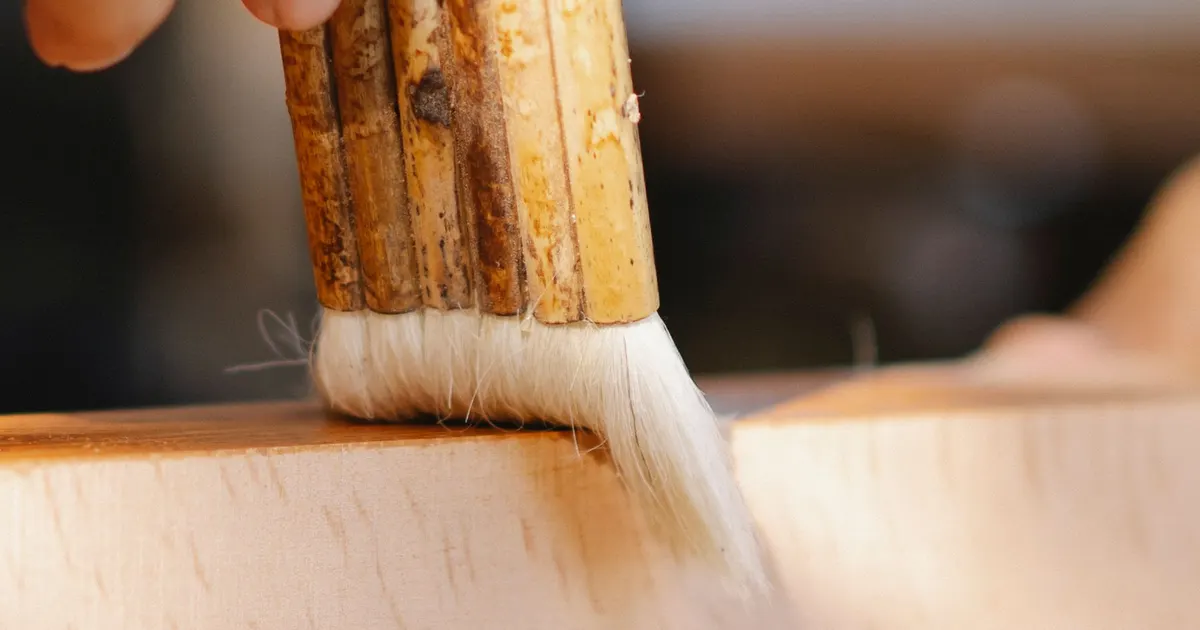
The glue line is the least visible part of a veneered panel and one of the most important. A good bond lasts for decades. A poor one blisters, telegraphs through the finish or lets go at an edge. Glue choice also changes what you should ask a veneer supplier for, because backing, moisture and species all interact with the adhesive.
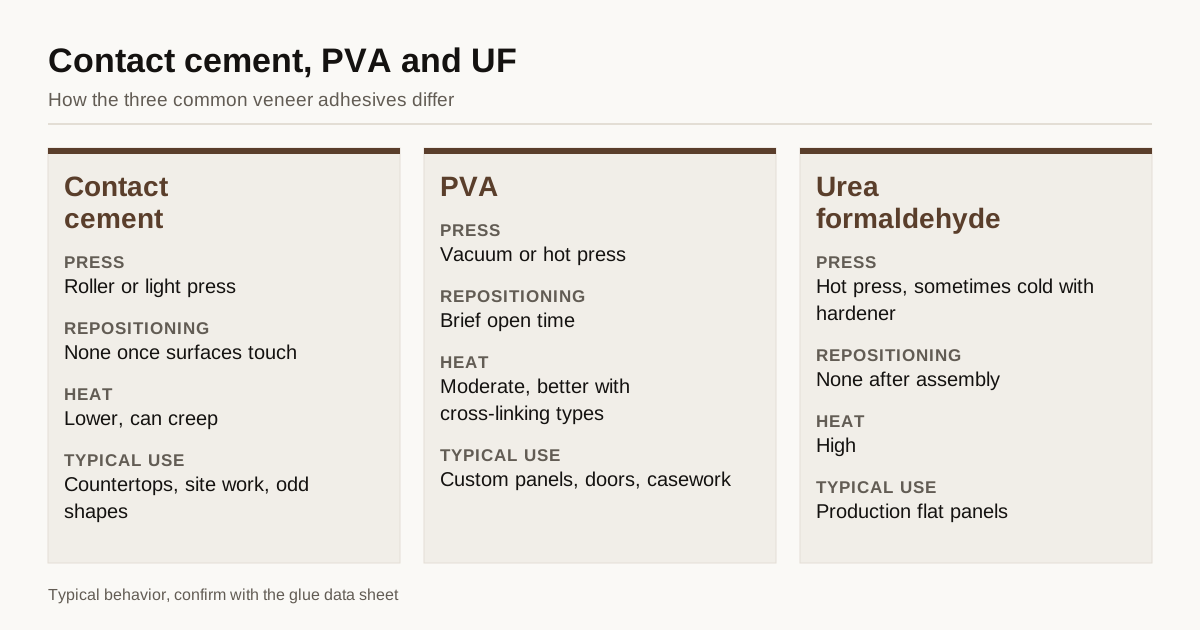
Three families cover most commercial veneer lay-up: contact cement, PVA and urea formaldehyde, usually shortened to UF. This guide compares them for shops that make panels, doors, casework and fixtures, and explains what to put on an order so the veneer matches the glue.
What the glue has to do
A veneer adhesive carries a short list of jobs. It has to wet the back of the leaf and the substrate evenly. It has to bond without bleeding through to the face, since a stain on the show side cannot be sanded out of a thin leaf. It has to stay stable under the moisture and temperature swings that the panel meets in service. And it has to fit the press and the schedule the shop runs.
Other requirements are specific to the product. Furniture that sits in a heated lobby needs a bond that resists heat. Panels bound for a humid port need moisture resistance. Fixtures that are moved often need a bond that tolerates handling.
Contact cement
Contact cement is applied to both surfaces, allowed to dry to the touch and then joined. Once the two coated surfaces touch, they bond on contact. Pressure from a roller or a hand press is enough to seat the bond, so no large press is required.
That makes it useful for countertops, site work, repairs and shapes that do not fit a press. Both solvent-based and water-based versions are sold, and shops choose between them based on ventilation rules and finish compatibility.
The tradeoffs are clear. The bond is immediate, so a veneer sheet that lands crooked cannot be shifted, and a bubble cannot be pressed out later. On thin faces the glue can show through on open-grain species if it is applied heavily. Contact cement bonds can soften with heat and creep over time under sustained load, so it is a weaker choice for panels near heaters, sunlit windows or high mechanical stress. Water-based types tend to work well with porous substrates, and solvent types bond to a wider range of surfaces. Check the data sheet for your substrate.
PVA
Polyvinyl acetate, in its white and yellow forms, is the common workshop glue. For veneer it is spread on the substrate, the veneer is laid on and the panel goes into a press. PVA needs steady pressure until the glue sets, which can be minutes under heat in a hot press or hours at room temperature in a vacuum press.
PVA is easy to find, easy to clean up and forgiving to use. Cross-linking versions give better resistance to moisture and heat than standard types. Many shops lay up veneer with PVA in vacuum presses for custom work.
The tradeoffs come from water and flexibility. PVA carries water into the veneer, which can swell thin leaves and cause waves or open seams if the veneer is already near the upper end of its moisture range. A cured PVA line is somewhat flexible and can creep under heat, which matters for panels in warm locations. It can also bleed through open-grain species if spread thick or thinned.
Urea formaldehyde
Urea formaldehyde is a thermosetting resin often supplied as a powder or liquid with a hardener. It cures with heat and pressure, and many production veneer plants run it in hot presses. The cured line is hard, stable and heat resistant, and the glue is economical at volume.
UF is the traditional choice for hardwood plywood and for veneering in industrial settings where a hot press is available. It cures quickly under heat and holds well.
The tradeoffs are handling and regulation. UF has a shorter pot life once mixed, so batch size and timing matter. The cured line is rigid, which suits flat panels but resists flexing. It emits formaldehyde, and in the United States composite wood and hardwood plywood panels are subject to national formaldehyde emission rules, with labeling and recordkeeping duties on fabricators and sellers. Buyers in other markets face their own limits. Panel and glue suppliers can say what applies to your product, and any compliance documents should be kept on file. This guide gives no legal advice.
Side-by-side comparison
| Factor | Contact cement | PVA | UF |
|---|---|---|---|
| How it bonds | Dry-to-touch, bonds on contact | Wet glue, sets under pressure | Heat-cured resin |
| Press needed | Roller or light press | Press, vacuum or hot | Hot press, sometimes cold press with hardener |
| Repositioning | None | Brief open time | None after assembly |
| Heat resistance | Lower, can creep | Moderate, better with cross-linking types | High |
| Flexibility of cured line | Flexible | Somewhat flexible | Rigid |
| Bleed-through risk | Moderate if thick | Moderate if thick or thinned | Lower when spread correctly |
| Typical use | Countertops, site work, odd shapes | Custom panels, doors, casework | Production flat panels |
These are typical behaviors, and each product differs. Use the data sheet for the exact figures.
How glue choice affects the veneer you order
The adhesive interacts with several veneer choices, and each is worth stating on the order.
Backing. A paper-backed sheet takes glue differently from a raw leaf, and a wood-backed sheet differs again. Paper backing can show glue strike-through if the adhesive is too wet, so ask the supplier about compatible glues. PSA-backed sheets carry their own adhesive, as the guide on PSA veneer sheets explains, and need none.
Thickness. Thin faces show bleed-through more readily than thick ones. A glue spread that works on a 0.9 mm face can mark a 0.5 mm face, so tune spread to the thinnest face you buy.
Species. Open-grain woods such as oak and ash pass glue through pores. Dense, closed species such as maple and cherry are less prone. If bleed-through is a concern, test a sample and consider a thicker face or a lower-water glue.
Moisture. Glues with high water content call for veneer at the lower end of the range, so there is room to absorb moisture. The guide on veneer moisture content at pressing gives typical ranges.
Matching glue to the press
Glue and press are one decision. The guide on vacuum press versus hot press covers the equipment side. A shop that runs a vacuum press at room temperature will usually pick PVA or a slow UF. A shop with a hot press may pick UF or a PVA formulated for heat. A shop that works on site or on shapes may choose contact cement.
When shops change glue, they often change spread rate, open time and cure time. A new glue deserves a few test panels before it goes into production, and it deserves a look at the sanding and finishing behavior too.
Spread rate, open time and clamp time
Three numbers on the data sheet decide most results. Spread rate is how much glue goes on per unit area, and too much is the main cause of bleed-through and slow dry-back. Open time is how long the glue stays workable after spreading, and it shrinks in a warm, dry shop. Clamp or press time is how long the panel must stay under pressure before the bond can be handled.
Write these three numbers on a card at the press and update them when the season changes. A winter shop and a summer shop can need different open times for the same glue, and a card on the wall is easier to follow than a memory.
Glue lines and finishing
The glue line affects the finish in indirect ways. Dried glue takes stain differently from wood, so squeeze-out that is left on the surface shows as pale patches under stain. Glue that has bled through to the face leaves darker or lighter marks depending on the glue. Hard glue lumps resist sandpaper and cause thin spots around them, which feeds into sand-through risk, covered in the guide on veneer sand-through risk.
A habit that prevents most of this is to spread glue evenly with a roller or a notched spreader, to wipe squeeze-out while it is wet and to check the glue-line quality of any new lot of veneer or core before running a full job.
Checklist before choosing a glue
- State the press type and the cycle time you can run.
- State the substrate, the veneer backing and the face thickness.
- Check the glue data sheet for moisture, temperature and spread guidance.
- Confirm heat and moisture exposure in service.
- Ask panel suppliers about formaldehyde labels where they apply.
- Press a test panel and finish it before production.
When you are ready to source veneer for a specific glue and press, send the species, form and process details on the RFQ page. The request goes to up to three suppliers that stock that species in that form, with a reply within 24 business hours.
Frequently asked questions
Can I use regular wood glue for veneer?
Standard PVA wood glue works for veneer in a press, but it can bleed through open-grain species if spread too thick and it needs steady pressure while it cures. Use a glue spread suited to the face thickness and test a sample first. Some PVA products are made specifically for veneer.
Is contact cement acceptable for large panels?
It is used for countertops and fixtures because it grabs at once and needs no press. The bond cannot be repositioned and it can creep under heat, so many professional shops prefer a press with PVA or UF for panels that carry load or face heat.
Do I need to worry about formaldehyde from UF glue?
In the United States, composite wood and hardwood plywood panels are covered by formaldehyde emission rules, and buyers often ask for compliance labels. Ask the panel and glue suppliers what applies to your product and your market, and keep their documents on file.
Know what you need? Send the spec.
Tell us the species, cut, form and square footage. We pass it to up to 3 veneer suppliers that stock it and reply within 24 business hours.
Send my veneer RFQ